
The Signs People Laugh Off First
Small Memory Slips Can Feel Harmless Until They Start Changing Your Routine
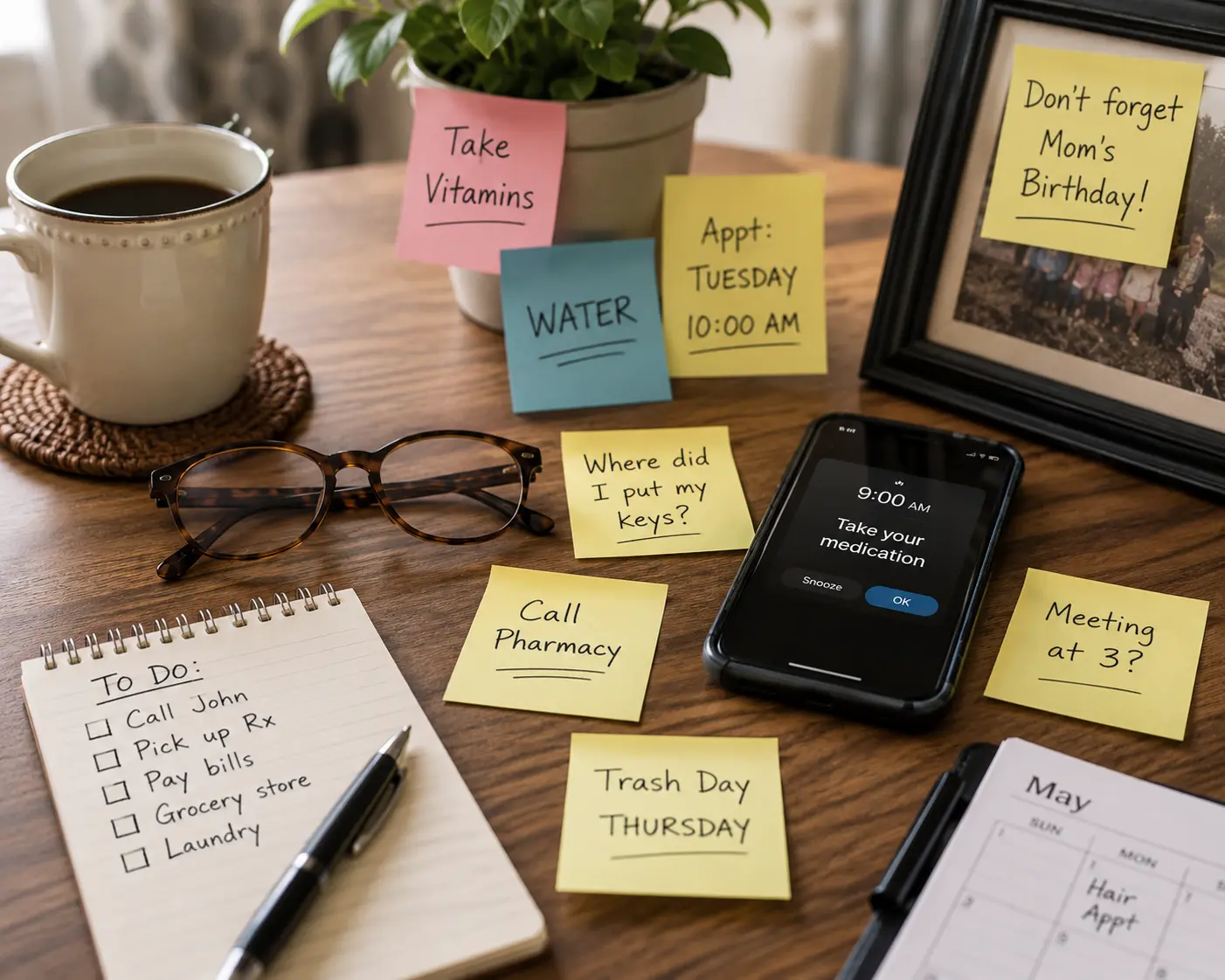
If you’ve been forgetting names, losing words, misplacing everyday items or relying on notes more than before, you’re not alone.
Many adults experience these moments and try to laugh them off. They call them “senior moments.” They blame stress, sleep, age or having too much on their mind.
But privately, those little blanks can feel different. One forgotten name can make you avoid introductions. One lost word can make you speak less at dinner. One moment of confusion can make you wonder whether your confidence is starting to slip away with the memory itself.
- You forget a name you should know.
- You walk into a room and forget why.
- You lose a word in the middle of a sentence.
- You depend more on reminders.


A Story Many Families Recognize
She Thought It Was Just Another “Senior Moment”
At first, she laughed it off. Everyone forgets a name once in a while. Everyone walks into a room and forgets why. Everyone misplaces keys, repeats a story or loses a word mid-sentence.
But little by little, the laughter started to feel forced.
The worst moments happened at family dinners. A familiar word would disappear. A name would sit on the tip of her tongue and refuse to come out. Someone would gently correct her, and she would smile.
But inside, something tightened. Because deep down, she was not afraid of forgetting one word. She was afraid of what that word might mean.
Then she watched a presentation that explained memory slips in a way she had never heard before. It did not make her feel broken. It made her feel understood.
Quick Self-Check
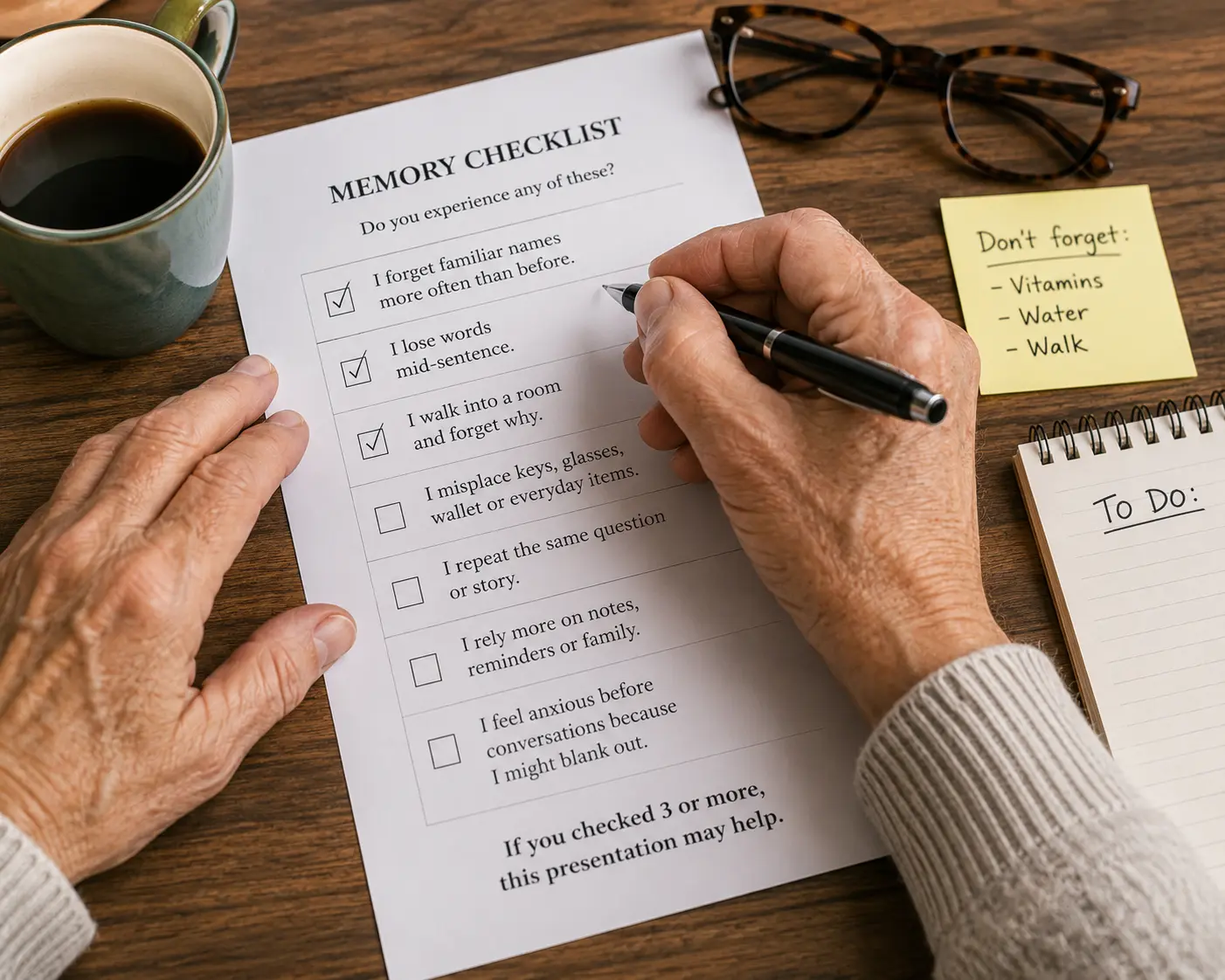
If You Have 3 Or More Of These Memory Signs, Pay Close Attention
One forgotten name may not mean much. But when several of these signs begin showing up together, they can quietly affect confidence, routine and the way you feel around other people.
- You forget familiar names more often than before.
- You lose words mid-sentence.
- You walk into a room and forget why you went there.
- You misplace keys, glasses, wallet or everyday items.
- You repeat the same question or story without realizing it.
- You rely more on notes, reminders or family members.
- You feel anxious before conversations because you might blank out.
If you checked 3 or more, the video may help you understand why these moments happen and why dismissing them as “just age” may not tell the full story.
Reader Experience
I Wasn’t Afraid Of Forgetting A Word. I Was Afraid Of What It Meant.
I kept pretending everything was fine. But every time I forgot a name or lost my thought in the middle of a sentence, I felt that little panic in my chest.
I had tried notes, reminders and all the usual advice, but nothing explained why it kept happening.
Then I watched the presentation. For the first time, the pattern made sense. I felt less ashamed and more aware of what I needed to pay attention to.
What changed most was my confidence. I started joining conversations again instead of hiding from them.

Why This Is Worth Watching Before You Decide
A Simple Memory Explanation Before You Make Any Decision
This page is not asking you to believe in a miracle.
It is asking you to look at a pattern many people ignore for too long: small lapses, mental fog, lost words and growing hesitation in daily life.
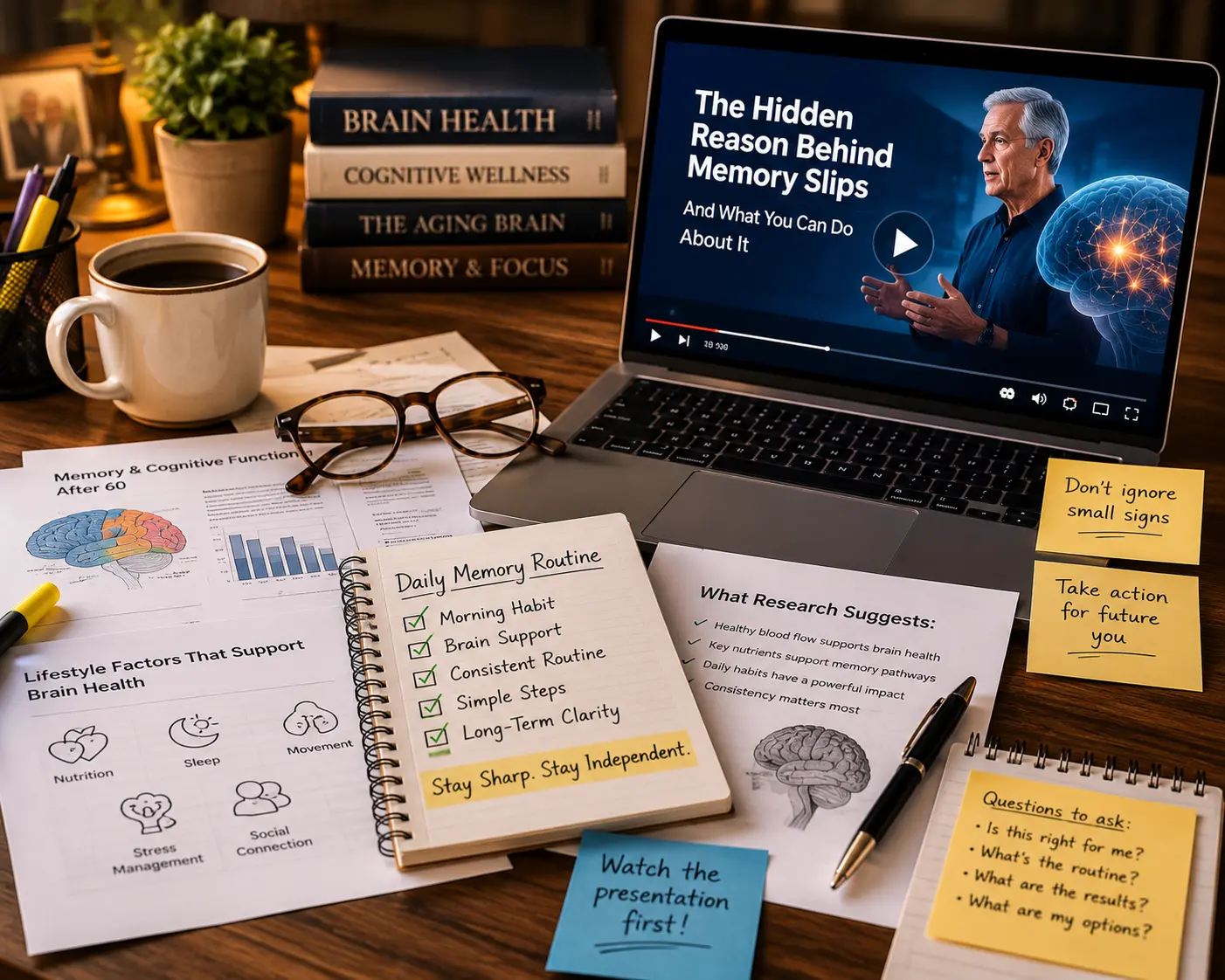
The full presentation explains the memory-access idea in simple language and shows why many adults are rethinking their daily clarity routine.
You will see why common explanations like age, stress or distraction may not answer every question. You will also see how a simple morning routine is connected to the explanation, so you can review the details and decide for yourself.
No Pressure. No Diagnosis. Just Watch The Explanation First.
If you continue after the presentation, you may be shown product details, bundle options, free shipping on select packages and a 60-day satisfaction guarantee.
Common Questions
Before You Watch, Here’s What Most People Ask
Who Should Watch This Presentation?
Anyone who has noticed more frequent memory slips, mental fog, forgotten names, lost words or reduced confidence in conversations may find the explanation useful.
Is This About Normal Aging?
Not exactly. The presentation challenges the idea that every memory slip should automatically be dismissed as age. It explores why familiar information can suddenly feel harder to access.
Does This Diagnose Or Treat A Condition?
No. The presentation is educational and does not diagnose, treat, cure or prevent any disease. If you are concerned about memory changes, confusion or daily functioning, speak with a qualified healthcare professional.
What If I Already Tried Memory Games Or Reminders?
Those can help some people manage daily life. But they may not explain why the pattern keeps happening. This presentation focuses on the hidden “access” angle behind everyday lapses.
Do I Need A Prescription?
The presentation will explain the routine and direct you to product details if you choose to continue. Always review label details and speak with a qualified professional if you have questions.
What Happens After I Click?
You’ll watch the full presentation, understand the memory-access explanation and then decide whether the next step makes sense for you.

Before You Ignore Another Blank Moment, Watch This Presentation
A forgotten name may seem small. A lost word may feel easy to explain away. But when these moments begin repeating, they can quietly change how confident, present and independent you feel in daily life.
Free to watch. Educational presentation. Product details may appear after the video.